


Branded event gift ROI is measurable when branded merchandise and promotional products are treated as campaign tools, not standalone expenses. Evaluate each item through recipient behavior, relationship value, and attendee engagement.
Measure financial return on investment through attendance, meetings, follow-up, retention, or revenue. A useful engraved tumbler or personalized keepsake can make people feel valued while offering daily utility after the event. Event giveaways work best when matched to recipient value and a defined follow-up action.
- Match the gift level to the recipient’s relationship value and intended next action.
- Count freight, packaging, storage, and leftover inventory alongside the item price.
- Track meaningful behavior after the event, not scans and impressions alone.
Key Takeaways About Branded Event Gift ROI
The strongest return comes from useful products, thoughtful personalization, and a measurement method agreed on before ordering. An intentional gift can support recognition and relationships, while a poorly matched giveaway may consume budget without producing a clear result.
- Measure fully loaded cost. Include products, personalization, freight, drayage, packaging, rush fees, and unused inventory.
- Separate awareness from revenue. Promotional products and event giveaways can improve visibility, but financial ROI requires attributed gross profit.
- Choose practical items. High utility items can support brand recall and lifetime impressions after the event, but they don’t prove revenue.
- Personalize high-value moments. Names, milestone dates, and short messages create more meaning than a logo alone.
- Use three gift tiers. Reserve premium gifts for qualified leads, loyal customers, and leadership recognition. Custom socks may suit a broad audience, but shouldn’t automatically receive premium personalization.
- Give every promotional item giveaway a purpose. Link each item to a scan, meeting, welcome-kit action, or follow-up path. A sponsor swag stack needs a clear role, not several unrelated items.
- Order against attendance data. Protect the budget with confirmed counts, controlled extras, and a plan for leftovers.
The 2026 ASI Global Advertising Impressions Study reports that 85% of consumers remember the promotional product they receive, according to ASI’s summary of the study. Recall is a helpful starting point, yet it doesn’t replace campaign attribution.

Define What Return Means Before Comparing Gifts
A branded event gift can produce exposure, engagement, relationship value, or direct sales. Those outcomes aren’t interchangeable. Define the desired return on investment before choosing products or approving quantities.
| Metric | Simple Calculation | Best Use |
|---|---|---|
| Cost per recipient | Fully loaded campaign cost / gifts delivered | Compares gift tiers |
| Cost per impression | Fully loaded campaign cost / estimated verified impressions | Evaluates ongoing visibility |
| Engagement rate | Tracked actions / gifts delivered | Measures scans, meetings, or redemptions |
| Financial ROI | (Attributed incremental gross profit – campaign cost) / campaign cost x 100 | Evaluates business return |
The table keeps a low cost per impression in its proper place. Lifetime impressions can support secondary awareness analysis, but they don’t prove that gifts created revenue. Marketing ROI may also include measurable relationship or campaign outcomes when financial attribution isn’t immediate.
Separate Exposure, Engagement, And Revenue
Exposure includes a logo seen on a tumbler, notebook, or bag. A promotional item may generate impressions without attributable revenue. Engagement includes a QR code scan, a booked consultation, a survey response, or a return visit to a campaign page. Revenue means a sale or renewal that your team can reasonably connect to the event program.
Event giveaways describe broad distribution, while promotional item giveaways are easier to evaluate through tracked recipient actions. Promotional items ROI depends on whether exposure leads to measurable engagement, relationship value, or attributed profit.
A scan shows interest. A completed meeting and attributed gross profit show commercial return.
For employee recognition, the desired outcome may be participation, milestone completion, or retention signals rather than a sale. Tie the gift to a defined moment, such as an anniversary, leadership award, or onboarding event.
Use Fully Loaded Cost, Not Unit Price
A $12 item may cost far more once it reaches an event floor. Add product cost, artwork preparation, individual names, protective packaging, freight, convention center handling, storage, and any rush charge.
Also count labor. If a small team spends hours sorting unmarked boxes or matching names to gifts, that is part of the campaign cost. A quote should show the product choice, quantity, personalization details, delivery method, and event date so you can compare suppliers on the same basis. Use attributed incremental gross profit, not revenue alone, in the financial ROI calculation.
Build A Measurement Model Before Ordering
Attribution works best when the gift, recipient list, and follow-up process share a common identifier. Set up identifiers by event, recipient segment, gift tier, and product type before proofs are approved, so the system can distinguish event giveaways, promotional item giveaways, and products such as custom socks. Trying to recreate this structure after the event often leaves your team with assumptions instead of evidence.
Start With A Baseline And A Clear Goal
Review a comparable event, campaign, account group, or program, including corporate gifting programs. Record prior attendance, meeting rate, qualified leads, opportunity creation, average deal size, customer renewal, or employee participation. Then set a narrow goal for this event.
For example, a scheduled-meeting gift program may aim to increase qualified conversations. A customer appreciation dinner may focus on renewal discussions. An employee milestone gift may seek higher participation in the recognition program.
Use a similar group without the premium gift when practical. Keep the audience, offer, and follow-up timing as close as possible. That comparison helps isolate the gift’s influence.
Give Each Gift A Trackable Path
Add a unique QR code to a gift card, package insert, event display, or thank-you note. The destination should fit the recipient’s next step, such as a booking page, product demonstration, customer survey, or private resource page.
Tag each destination by event, gift tier, and recipient segment. Your CRM can then record delivery, attendee engagement, action, opportunity stage, and gross profit separately. Sales teams should agree on attribution rules before outreach begins, and report untracked recognition outcomes separately from direct revenue attribution.
Choose Gifts That Travel Well And Stay Useful
The product should fit the event setting and the recipient’s real routines. Branded merchandise works best when it supports daily utility rather than creating another item to carry. A heavy or awkward giveaway can create friction at a trade show, while an item with regular use can remain part of someone’s workday.
PPAI consumer research found that usefulness is the leading reason people keep promotional products. High utility items can support stronger retention after an event. The same research found that 70% of consumers connect product quality with the giver’s company reputation. Material, finish, personalization space, and fit therefore affect both retention and brand perception.
Favor Durable, Portable Gift Categories
Insulated tumblers and other custom drinkware offer strong daily utility, but their larger carton size can complicate shipping logistics. Branded tote bags, flat portfolios, leather notebooks, and metal pens usually pack more easily. Branded apparel, including custom hoodies and custom t-shirts, can offer useful visibility but requires size planning. Custom socks may fit smaller packages, though sizing and recipient preferences still matter.
For trade show giveaways, portable items often outperform bulky options. A sponsor swag stack should be judged by usefulness and handling requirements, not by the number of items. Personalization space also varies, so choose a format that gives the message enough room without overwhelming the product.
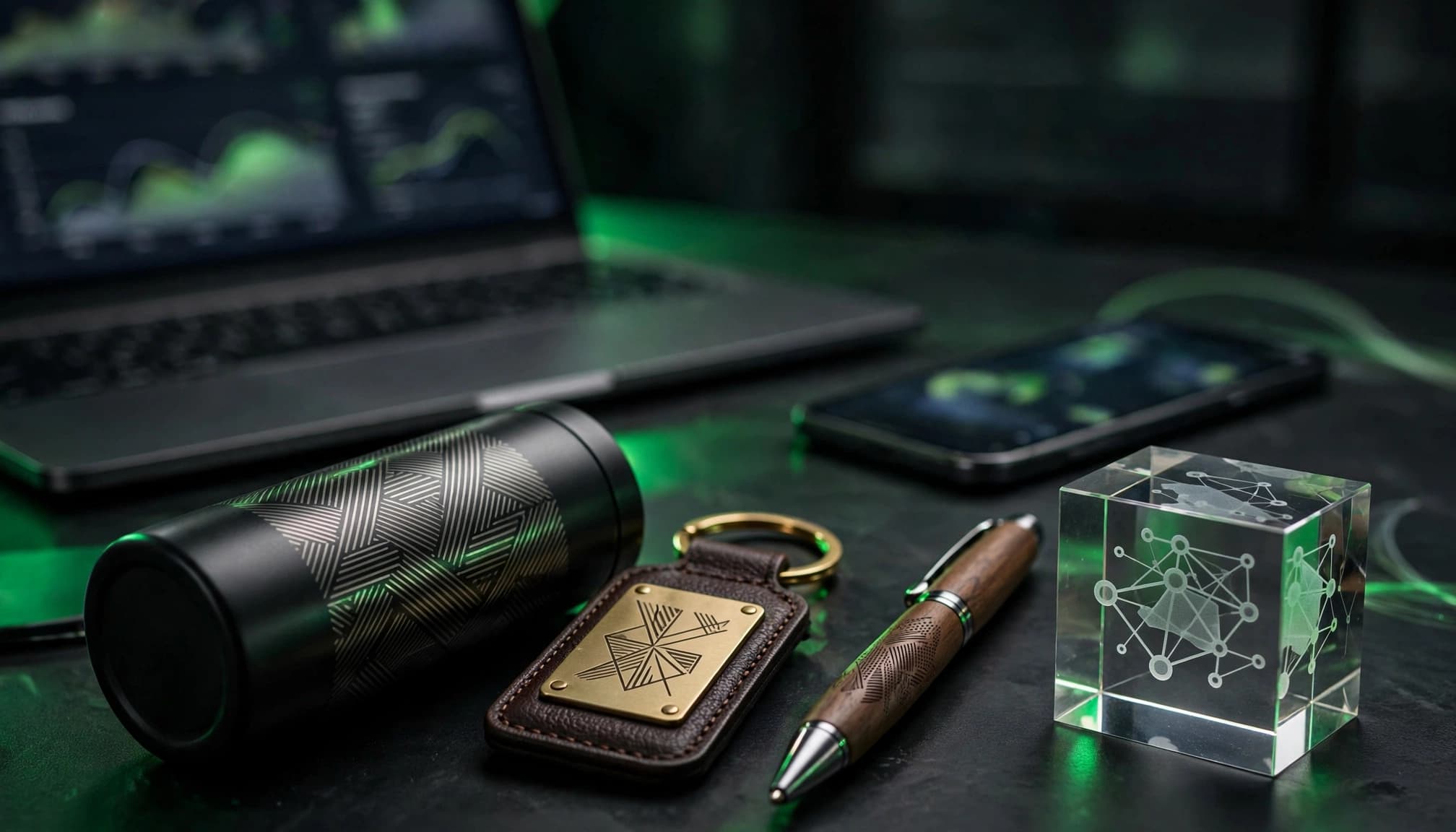
Bulk engraved tumblers work well for welcome kits, employee appreciation, and client events because recipients can use them regularly. Engraving creates a focused personalization area that can make recognition feel more intentional.
Cheap pens and stress toys still have a place in high-volume event giveaways and broad trade show giveaways. However, they rarely suit a recognition moment or a tracked relationship campaign because the recipient has little reason to connect the promotional item with a meaningful action. Custom socks can be a better fit when the audience and sizing are clear.
Durable materials, realistic quantities, and fewer replacements can support sustainable promotional products. The goal is to reduce disposal without adding unnecessary inventory.
Compare Utility Against Logistics
Price is only one product variable. Drinkware needs protective packaging and uses more freight space than flat items. Branded apparel can create size issues and leftover stock. Tech accessories may raise compatibility questions.

Ask how products will be packed, labeled, shipped, stored, and handed out. Convention center drayage and last-minute delivery changes can erase a low unit-price advantage. Flat and compact gifts can reduce those handling concerns.
Use Gift Tiers To Match Cost With Relationship Value
A tiered approach avoids giving every attendee the same expensive item and keeps event giveaways aligned with the relationship stage. It also protects recognition’s meaning, since a sponsor swag stack doesn’t automatically create a stronger experience. The tier should reflect the relationship, milestone, or commitment, while the measurement plan determines whether the spend produced the intended outcome.
Give General Attendees A Useful Welcome
For broad attendance, choose a compact item with a simple brand mark and practical purpose. Promotional item giveaways such as branded tote bags, custom socks, welcome kits, or insulated tumblers can work when their perceived value and logistics fit the audience. Custom t-shirts introduce sizing and inventory risk, so use them only when attendance is predictable.
Tie this tier to an accessible action, such as visiting a booth, checking in, or completing a post-event survey. Count how many gifts were actually delivered instead of assuming every packed item reached a recipient.
Reserve Premium Gifts For Qualified Relationships
Scheduled meetings, qualified leads, major donors, long-term customers, and leadership groups deserve a more personal approach. Corporate gifts and premium recognition products, such as an engraved tumbler with a name, a leather portfolio, or a recognition award, can make appreciation tangible when the item fits the milestone.
Employee recognition programs can also use defined gift levels for service anniversaries, performance awards, leadership, and major accomplishments. Corporate gifting programs can apply the same structure to repeat customers, donors, and employee recognition. The measurement plan should show whether the spend supported its intended outcome without making every recipient experience feel generic.

Reduce Waste Before The Event
Over-ordering is one of the fastest ways to weaken return on investment. Use registration data, confirmed meetings, VIP lists, and past attendance rates to set quantities for event giveaways. Review past attendance and redemption patterns for promotional item giveaways, then hold a modest reserve for late registrations and replacements.
Confirm Details Before Personalization
Names, titles, logos, delivery addresses, and event dates should be checked in one approved file. Ask for a proof that shows engraving placement, contrast, and spelling before production begins.
For named gifts, create a backup plan for cancellations. A few non-personalized items can cover on-site changes, while event-specific products can move into a later customer or employee program.
Plan A Second Life For Extras
Leftover products don’t have to become dead inventory. Custom socks and other items can move into welcome kits, onboarding programs, employee recognition, donor appreciation, or future events. Record each transfer and its use so the original event budget doesn’t carry the entire cost.
Include storage, relabeling, delivery changes, and shipping logistics in the plan. Durable sustainable promotional products support continued use when ordered in realistic quantities and assigned to a clear second life.
A joint PPAI and ASI study found branded merchandise had a comparatively low carbon impact among measured advertising channels, supported by strong recall and impressions. Ordering durable products in realistic quantities supports that advantage.

Branded Event Gift ROI Frequently Asked Questions
A quote, recipient plan, and tracking method should work together. These common questions can help shape a purchase that’s easier to defend after the event.
What Is A Good Branded Event Gift ROI?
A positive financial return means attributed incremental gross profit exceeds the fully loaded campaign cost. For recognition events, corporate gifts should support participation, retention, or relationship activity defined before spending.
How Is Cost Per Impression Calculated?
Divide the fully loaded cost by verified or carefully estimated impressions. Include the promotional item cost, personalization, delivery, and handling. Promotional item giveaways may create awareness, but impressions don’t prove revenue.
Which Trade Show Gifts Survive Airport Travel?
Compact, durable products work best for trade show giveaways. Insulated tumblers, flat portfolios, notebooks, and quality pens are easier to carry than bulky, fragile, or low-use items. Confirm product limits, compatibility, and available decoration methods before ordering.
Do Cheap Promotional Items Have A Place?
They can work for broad, low-cost distribution when the goal is visibility. Promotional item giveaways suit general traffic, while tracked actions deserve better materials. Compare the full sponsor swag stack, including apparel, packaging, and personalization, before choosing the best fit.
How Should Gift Tiers Be Distributed?
Assign general items to attendees, mid-tier products to completed meetings, and premium personalized gifts to priority accounts, leaders, or milestone recipients. Set quantities for each group of event giveaways, then record every handoff.
Do Drayage And Freight Affect Event Gift ROI?
Yes. Product weight, carton size, venue handling, storage, shipping logistics, and delivery timing all increase total cost. Compare delivered cost, not the promotional item price alone. Confirm shipping terms, insurance, and support with the quoted supplier.
Can QR Codes Track Engraved Gifts?
QR codes can track page visits, meeting requests, and survey completions when each campaign or tier uses a distinct destination. Connect those actions to CRM records to measure attendee engagement and attribute activity from qualified leads.
How Far Ahead Should Event Gifts Be Ordered?
Start once the event date, estimated quantity, product choice, and artwork are stable. Custom hoodies, custom t-shirts, and custom socks may require different setup times, size planning, and artwork approvals. Returns, warranty coverage, compatibility, support, and shipping policies depend on the quoted product and supplier terms, so confirm them before ordering.
Next Steps For Branded Event Gift ROI
A strong plan starts with a gift that reflects genuine appreciation and ends with a result your team can explain. Engravd helps organizations recognize the people who matter through personalized products that mark achievement, loyalty, leadership, and shared milestones.
- Share the event date, venue or delivery location, recipient count, and reserve quantity.
- Define audience tiers and distribution plans for event giveaways and promotional item giveaways. Include attendees, scheduled meetings, customers, donors, or employees, and note corporate gifts needs.
- Share product preferences, including the preferred promotional item category, plus approved artwork, personalization data, and recipient messages.
- Agree on the promotional items ROI formula, tying success to total cost, attributable behavior, or relationship outcomes.
- Request a Quote with product preferences and logistics details for a clear, event-ready recommendation.